

A practical guide for parents on spotting the signs, understanding what actually helps, and knowing when it’s time to get support.
Sound familiar?“She cried the whole way to the birthday party and begged me not to go in. She’s 9.”
“He hasn’t eaten lunch at school in weeks. He says the other kids stare at him.”
“She used to love gymnastics. Now she won’t go because there might be a performance.”
If any of that sounds familiar, you’re in the right place. This article will help you understand what you’re seeing, what it means, and what to do about it.
In This Article
Is This Just Shyness?
Most parents ask this first. And it’s a fair question. Almost every kid goes through stretches of being clingy, nervous in new situations, or quiet around people they don’t know. That’s completely normal.
But there’s a real difference between a child who takes a few minutes to warm up at a party and one who spends the entire week beforehand in tears refusing to go. The first is shyness. The second might be social anxiety disorder.
Social anxiety disorder isn’t about being introverted or quiet. It’s about fear. An intense, persistent fear of being judged, embarrassed, or laughed at. And that fear becomes strong enough to start running your child’s life.
| Normal Shyness | Social Anxiety Disorder | |
|---|---|---|
| How long does it last? | Fades once they warm up | Stays intense even after being in the situation; doesn’t ease with time or exposure |
| How intense is it? | Mild discomfort | Intense fear or dread |
| Do they join in? | Usually, eventually | Avoids or endures with distress |
| Does it affect daily life? | Minimal impact | Affects school, friends, family |
| Does it improve over time? | Yes, typically | Gets worse without help |
How Common Is This?
About 9% of adolescents develop social anxiety disorder, making it the most common anxiety disorder in youth. Most cases start between ages 8 and 15. Many parents don’t recognize it until symptoms have been present for years. You are not alone in wondering what’s going on.
What Social Anxiety Looks Like in Kids
Social anxiety doesn’t always look like panic. A lot of the time it looks quiet. Subtle. Easy to explain away.
It shows up across four areas:
- “Everyone is staring at me”
- “I’m going to say something stupid”
- Dreading an event days in advance
- Replaying social mistakes afterward
- “They all think I’m weird”
- Stomachaches before school
- Blushing, sweating, shaking
- Mind goes blank; voice shakes
- Young kids: tantrums, clinging, freezing, refusing to speak
- Nausea before social events
- Refusing parties, sleepovers, school events
- Not eating in the cafeteria
- Never raising a hand in class
- Over-preparing for everything; avoiding eye contact
- Teens: dropping activities, avoiding dating
- Grades drop; school refusal
- Few or no close friendships
- Family activities disrupted
- Increasing isolation
- More dependent on parents
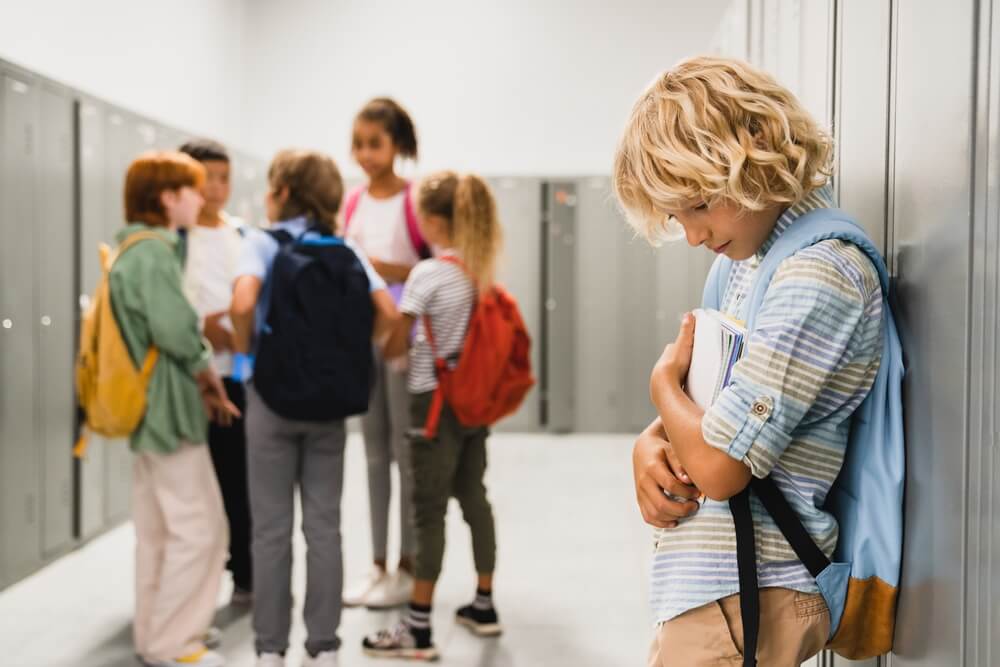
The world of a child with social anxiety gets smaller and smaller, not all at once, but one skipped birthday party at a time.
Here’s the sneaky part: a lot of avoidance is invisible. The child who over-prepares for every presentation, sits in the back of every room, or texts instead of ever calling anyone. These are all forms of avoidance, and avoidance is what keeps anxiety going.
What it actually sounds like at home
“I don’t want to go to Emma’s party. What if nobody talks to me? What if I cry?”
Refuses to answer in class even when they know the answer. Comes home exhausted every day. Stomachaches every morning.
Quits the team. Stops going to youth group. Spends more and more time alone in their room.
Won’t eat in the cafeteria. Panics before presentations. Avoiding everything that feels socially risky.
Just About Performing?
Some kids are completely fine in everyday situations but completely fall apart when they have to perform or speak in front of others. Class presentations, recitals, speeches. This is a recognized and very treatable form of social anxiety, even when everything else seems fine.
Recognizing these patterns in your child? We’ve worked with hundreds of families navigating exactly this.
Free for parents
Shy, or something more?
Our one-page checklist, 10 Signs Your Child May Need Extra Support, helps you tell a rough patch from a pattern worth paying attention to.
Why Does This Happen?
Social anxiety isn’t caused by a parenting mistake or a single bad experience (though sometimes a specific moment plays a role). It usually comes from a combination of temperament, genetics, and environment working together.
Some Kids Are Just Wired This Way
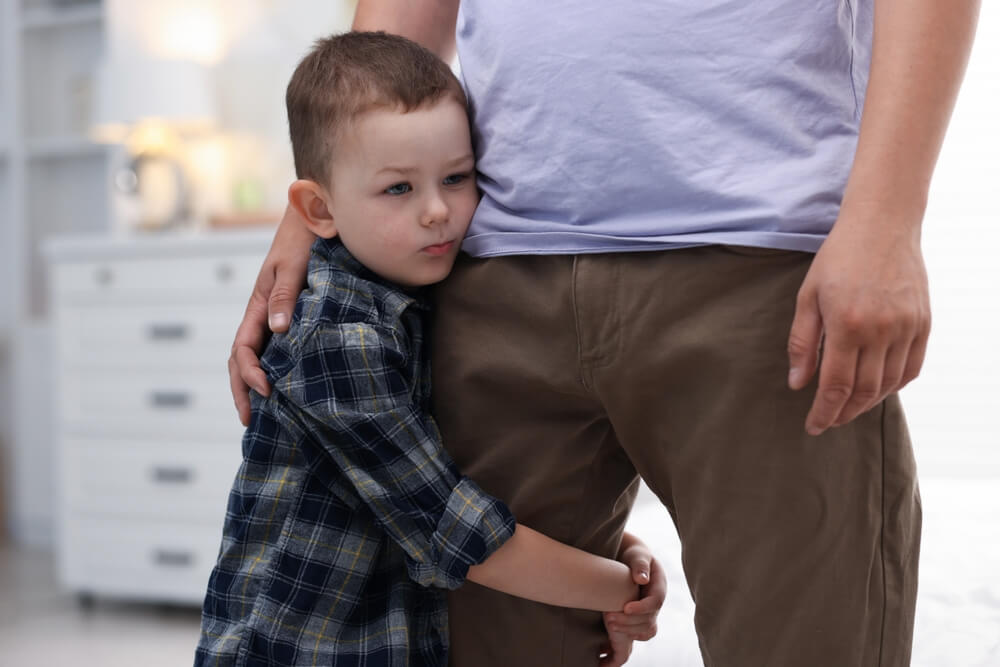
There’s a temperament style researchers call behavioral inhibition. Highly inhibited kids are the ones who, as toddlers, clung to you in unfamiliar places. Who took forever to warm up. Who cried when routines changed. This is a real, measurable, largely genetic neurological pattern. You didn’t cause it.
Higher risk of social anxiety for children with behavioral inhibition
Of inhibited children do NOT develop social anxiety with the right support
Greater risk if a parent has social anxiety themselves
The important thing: temperament is not destiny. How parents respond to an inhibited child makes a significant difference. The biology sets the stage. What happens next is not written in stone.
Sometimes a Specific Event Starts It
Parents often ask: “Did something happen?” Sometimes the answer is yes. Being bullied, freezing during a class presentation, getting laughed at, or one public moment that felt unbearable. A single humiliating experience can become the filter through which a child views every social situation going forward.
Other times, nothing specific happened. It built gradually, quietly. Both are real, and both respond to treatment.
It Rarely Comes Alone
Social anxiety often occurs alongside other conditions. This is important to know, because treatment works best when the full picture is understood.
Generalized worry, separation anxiety, and specific fears often occur alongside social anxiety
Repeated avoidance and isolation can lead to sadness and low mood, especially in teens
Social struggles and peer rejection in ADHD can trigger or co-exist with social anxiety
Some kids go completely silent in certain social settings despite speaking normally at home
High-functioning ASD and social anxiety look similar and often co-occur. A full evaluation helps sort them out
This is exactly why a good evaluation matters. We’re not just looking at one symptom in isolation. We’re looking at your whole child.
What Parents Can Do (and Avoid)
Here’s something I tell almost every family I work with: You are not the cause of your child’s social anxiety. But you can be a major part of the solution.
Parenting a socially anxious child is genuinely hard. Every protective instinct you have says: get them out of the painful situation. And in the moment, that feels like kindness.
But over time, it teaches your child one thing: The world really is too dangerous to face.
The Accommodation Trap
Researchers call this “family accommodation.” It’s one of the biggest drivers of ongoing anxiety in kids, and almost every family falls into it, because it comes from love.
The Anxiety Accommodation Cycle
→
→
→
→
Relief feels like success in the moment. But relief from avoidance teaches anxiety to come back stronger next time.
What Feeds the Anxiety
- Letting them skip events to avoid distress
- Answering “Will it be okay?” over and over
- Solving the problem before they can try
- Texting, ordering, or speaking for them
- Showing visible anxiety yourself
What Builds Confidence
- Warm encouragement toward the hard thing
- Letting them try, even if it’s messy
- Validating feelings without endorsing avoidance
- Staying calm and confident yourself
- Gradually stepping back your protection
This Is Not About Blame
Research shows the relationship between parenting and child anxiety runs in both directions. Anxious kids pull for more protection. More protection increases anxiety. More anxiety pulls for more protection. It’s a loop, not a character flaw on anyone’s part. But understanding the loop is how you start to break it. Parents who shift these patterns, ideally with professional guidance, see real changes faster than they expect.
Research Finding Worth Knowing
A long-term study found that parents who supported their child’s independence at age 6 had children with significantly lower social anxiety all the way through age 13. Your influence is real, and it starts earlier than most parents realize.
What Actually Works
Good news: social anxiety disorder is one of the most treatable conditions in child psychology. We have decades of solid research, and the picture is clear. Most kids improve significantly with the right approach.
CBT: The Gold Standard
Cognitive Behavioral Therapy (CBT) is what every major clinical guideline recommends for childhood social anxiety. It’s been studied in over 60 clinical trials. It works, and it works well.
The core idea is simple: anxiety survives by avoidance. The way to reduce anxiety is to face what you fear, step by step, with support. CBT creates a structured roadmap for doing exactly that.
Learning why anxiety exists and why avoidance makes it stronger over time
Replacing “everyone is laughing at me” with a more realistic and balanced view
A step-by-step plan to face feared situations, starting with the easiest and building from there
Learning that anxiety is uncomfortable but not dangerous, and that staying in the situation is the path through it
Preparing for setbacks so progress sticks long after treatment is finished
How Long Does Treatment Take?
Most children with social anxiety complete treatment in 12 to 20 weekly sessions, and many families start seeing real changes within the first few weeks. That said, how long treatment takes depends on a lot of factors, including the severity of the anxiety, whether other conditions are present, and how quickly a child engages with the exposure work. It can be genuinely hard to predict at the start, and a good clinician will be honest with you about that. CBT can be done one-on-one, in a group, or online, and research shows all three formats produce meaningful results.
What If My Child Refuses to Go to Therapy?
This comes up all the time. Your child is anxious about social situations. Going to a therapist’s office is a social situation. The resistance makes complete sense.
SPACE: Therapy That Starts With You
SPACE (Supportive Parenting for Anxious Childhood Emotions) is a parent-only treatment. Your child doesn’t attend a single session. You do.
You learn how to recognize the accommodation patterns keeping the anxiety going, how to respond differently, and how to send your child a new message over time: I believe you can handle this.
As effective as CBT
In a study of 124 children, SPACE produced results equal to child-directed therapy on every outcome measure
SPACE is available in-person and via telehealth throughout NJ and NY. It’s a model I use regularly in my practice and one that works especially well for families where the child is resistant, or where anxiety and family patterns are deeply intertwined.
What About School?
School is where most of the feared situations happen. Effective treatment works with the school environment, not around it. That can mean educating teachers and adjusting how certain situations are handled. We help families navigate that piece as well.
When to Get Help
You don’t need to wait for a crisis. The earlier the support, the faster the progress and the less your child misses out on.
Ask yourself one question: Is anxiety making decisions in your family?
- !Your child is avoiding more things than six months ago
- !They get stomachaches, headaches, or meltdowns before school or social events
- !They’ve quit activities they used to love
- !They have no real friendships or their social world is shrinking
- !Your family regularly reorganizes around their anxiety
- !They’ve told you they hate feeling this way
- !This has been going on for more than a few months
This Won’t Just Go Away on Its Own
Social anxiety disorder tends to be a chronic condition without treatment. Unlike some childhood fears, it doesn’t usually grow out of. The kids who do best are the ones who get support early, before avoidance has years to become a way of life. Every month of avoidance is a month of missed social development your child doesn’t get back.
An evaluation at Aspire starts with a conversation. We talk with you about what you’re seeing, ask questions about your child’s history and patterns, and help you understand what’s going on. From there, we build a plan together.
We see families throughout Bergen County (Upper Saddle River, Ridgewood, Franklin Lakes, Wyckoff, and surrounding towns) and Rockland County, NY (Spring Valley, New City), with telehealth available across NJ and NY.
A Note on How We Work
Aspire Psychological Group is a private-pay practice. We do not accept insurance. Many families are able to seek out-of-network reimbursement through their insurance plan, and we are happy to provide documentation to support that process. We believe in being straightforward about this from the start.


