

🕮 Estimated reading time: 14 minutes
Every parent I’ve ever worked with wants the same thing for their child: they want them to be happy and thrive. Not just happy when things are easy happy when things get hard. They want a child who can weather disappointment, navigate conflict, pick themselves back up after a failure, and keep going.
That quality the ability to face adversity and come through it is what psychologists call resilience. And after years of working with children and families in clinical practice, I can tell you with confidence: resilience is not a gift some children are born with and others are not. It is a skill set, shaped by experience, relationships, and the environment we create for our kids.
The research is clear on this. And the good news it offers parents is genuinely encouraging: you have more influence over your child’s resilience than you might think.
In this guide, I’ll walk you through what resilience actually looks like in children, what the science tells us about how it develops, and most importantly specific, practical strategies you can use in everyday parenting moments to help your child build this essential life skill.
 What You’ll Learn in This Guide
- What child resilience really means and what it doesn’t
- The #1 factor research links to resilient children
- 8 evidence-based strategies to build resilience at home
- The surprising role of sleep and play in emotional resilience
- Common parenting mistakes that unintentionally undermine resilience
- Signs your child is growing in resilience
- When to seek professional help
 Table of Contents
- What Is Child Resilience? (And What It Isn’t)
- The Science of Resilience: What Research Actually Tells Us
- The #1 Factor That Builds Resilience in Children
- Parenting Styles and Child Resilience: What the Research Shows
- 8 Evidence-Based Strategies to Raise Resilient Kids
- The Hidden Foundation: Positive Childhood Experiences
- Common Parenting Mistakes That Undermine Resilience
- Signs Your Child Is Developing Resilience
- Frequently Asked Questions About Child Resilience
- When to Seek Professional Support
- Final Thoughts: Resilience Is Built in the Ordinary Moments
What Is Child Resilience? (And What It Isn’t)
One of the most common misconceptions I encounter in my work with families is the idea that resilient children don’t struggle. Parents sometimes tell me they want their child to be “tough” meaning unfazed by difficulty, quick to move on, never visibly upset.
But that’s not resilience. That’s emotional suppression and it can actually get in the way of healthy coping.
It is the capacity to work through it.
Resilient children still feel anxiety before a big test. They still cry when a friendship ends. They still get frustrated when they can’t do something. The difference is not that they don’t feel those things it’s that they’ve developed the internal tools to move through them.
If your child seems to get stuck rather than bounce back, struggling to recover from setbacks, avoid meltdowns, or push through frustration, our work with children and families can help.
What Resilient Children Look Like
Research in developmental psychology points to several key markers:
| What You’ll See | What It Means |
|---|---|
| Emotional recovery | They bounce back from setbacks progressively faster with age and experience |
| Frustration tolerance | They persist longer when tasks are difficult rather than giving up at the first obstacle |
| Flexible thinking | They can generate multiple approaches to a problem rather than getting stuck |
| Help-seeking | They know when to ask for support and feel safe enough to do so |
| Strong relationships | They feel genuinely connected to at least one caring adult |
| Self-regulation | They’re developing the ability to manage their emotions and behavior, even when things are hard |

The Science of Resilience: What Research Actually Tells Us
Resilience research has expanded dramatically over the past four decades. What began as the study of children who “beat the odds” thriving despite poverty, abuse, or other serious adversity has grown into a rich body of evidence applicable to all children and families.
Landmark studies, including the Kauai Longitudinal Study led by Emmy Werner, followed children from birth into adulthood and identified the factors that distinguished resilient outcomes. What they found was striking: relationships mattered more than almost anything else.
Children who thrived in the face of significant adversity were not necessarily smarter, wealthier, or luckier. They had at least one stable, caring relationship with an adult who believed in them.
 Key Insight
Your relationship with your child is not just emotionally meaningful it is biologically protective.
The #1 Factor That Builds Resilience in Children
If you take nothing else away from this article, take this: the single most powerful thing you can do to raise a resilient child is to cultivate a secure, emotionally responsive relationship with them.
This doesn’t mean being a perfect parent. It doesn’t mean never making mistakes, never getting frustrated, or always saying exactly the right thing. What it means is being reliably present a person your child knows they can count on when things get hard.
In psychological terms, this is called secure attachment. Children who feel securely attached to their caregivers use those relationships as a safe base from which to explore the world and take emotional risks. They’re more likely to attempt new challenges, more able to regulate their emotions, and more likely to seek help when they need it.
What Emotionally Responsive Parenting Sounds Like
 Real Examples
 “Stop crying, you’re fine.”“Just do it yourself.”“I can’t believe you did that!”
These responses do two things simultaneously: they validate your child’s experience while also conveying confidence in their ability to cope. That combination “I see you, and I believe in you” is the foundation of resilience-building.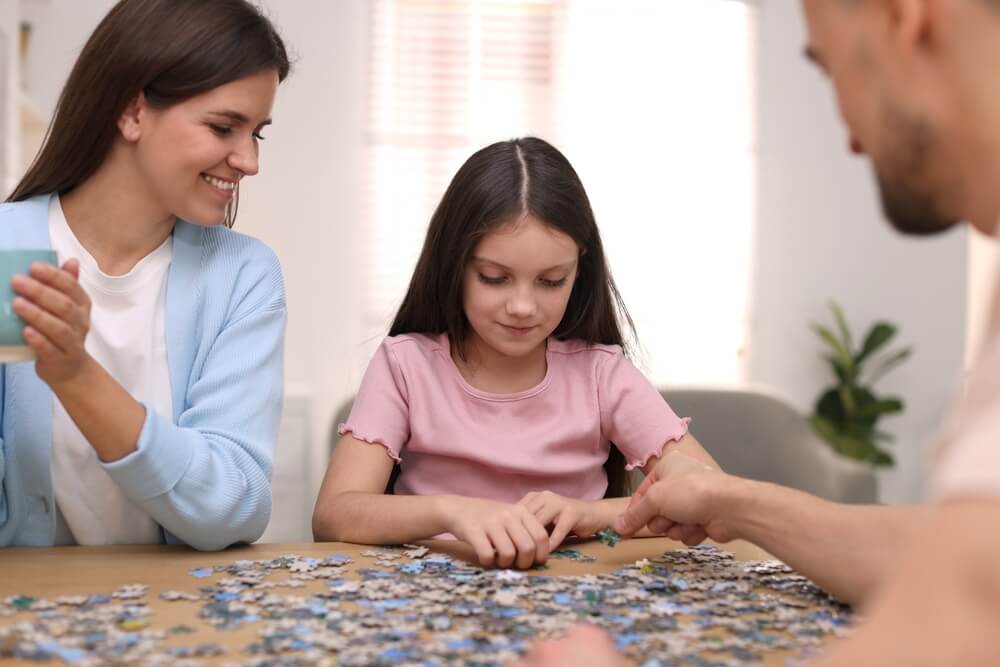
Parenting Styles and Child Resilience: What the Research Shows
Decades of research on parenting styles consistently point to one approach as most strongly associated with positive child outcomes, including resilience: authoritative parenting.
Authoritative parents combine genuine warmth and emotional attunement with clear, consistent expectations. They’re responsive but not permissive. Involved but not controlling. Structured but not rigid.
| Parenting Style | Key Characteristics | Impact on Resilience |
|---|---|---|
 Authoritative Authoritative | Warm + structured; high responsiveness, high expectations | Best for resilience: Builds self-regulation and coping skills |
 Authoritarian Authoritarian | High control, low warmth; rules without explanation | Can create fear of failure; may reduce willingness to take healthy risks |
| Permissive | High warmth, low structure; few boundaries | May limit development of frustration tolerance and self-discipline |
| Overprotective | Well-intentioned but shields child from difficulty | Fewer opportunities to practice coping; can increase anxiety |
A Note on Overprotective Parenting
This is worth addressing directly, because I see it frequently in my practice — and it almost always comes from a place of deep love. Parents who hover, rescue quickly, or shield children from disappointment are not doing anything wrong as people.
But children learn to cope by coping. When we consistently remove difficulty before children have the chance to work through it, we inadvertently communicate: “you can’t handle this.” Over time, children begin to believe that message and may not develop the skills they need to tolerate and work through distress.
8 Evidence-Based Strategies to Raise Resilient Kids
Here are the strategies I recommend most consistently to parents in my clinical practice all grounded in developmental psychology research.
Manageable challenge is the training ground for resilience. When a child encounters difficulty a tricky math problem, a falling-apart Lego creation, a conflict with a friend resist the urge to step in immediately.
Give them a few minutes to attempt a solution. Stay nearby so they feel supported, but give them space to try. The goal isn’t for them to solve it perfectly, it’s for them to experience what it feels like to keep going when things are hard.
What to Say
“I’m right here if you need me I want to see what ideas you come up with first.”
The Goal: Build tolerance for frustration and confidence in problem-solving
How Long to Wait:
- Ages 3–5: 2–3 minutes
- Ages 6–10: 5–7 minutes
- Ages 11+: 10+ minutes
One of the most common mistakes I see parents make is jumping straight to solutions when their child is upset. “Here’s what you should do…” or “just ignore them” before the child even feels heard.
The research on emotion coaching (developed by psychologist John Gottman) is clear: children who feel understood first are much better able to receive guidance and solve problems. When children’s emotions are acknowledged, they move through those emotions faster.
Learn about how we work with emotional regulation.
The Two-Step Approach
Step 1 Validate the emotion:
“That sounds really disappointing. It makes sense you’re upset.”
Step 2 Guide problem-solving:
“What do you think you could do?”
 Avoid These Common Responses
- “You’re fine.” (Dismisses their experience)
- “Stop crying.” (Shames the emotion)
- “It’s not a big deal.” (Minimizes their feelings)
- “Here’s what you need to do…” (Skips validation)
You’ve probably heard about the importance of praising effort over outcome the idea that telling children they’re “smart” makes them avoid challenges, while praising hard work builds resilience. This concept, called “growth mindset,” has been widely promoted in parenting and education.
The truth is more nuanced. While the theory makes intuitive sense, recent large-scale research has found that growth mindset interventions have much weaker effects than originally claimed. A 2023 systematic review found that when examining only the highest-quality studies, growth mindset interventions had essentially no effect on academic achievement overall.
That said, the underlying principle still has value: how you talk about effort, mistakes, and learning matters. Even if formal “growth mindset” programs don’t work as well as hoped, there’s still good reason to avoid labeling children as inherently “smart” or “talented” in ways that might make them fear failure.
Better Praise Examples
“You’re so smart!”“You’re a natural!”“You’re the best!” Realistic Expectations
Don’t expect praise alone to transform your child’s resilience it’s one small piece of a much larger puzzle.
Children are remarkable observers of adult behavior. How you handle your own stress, frustration, disappointment, and mistakes teaches your child an enormous amount about how to handle theirs.
This doesn’t mean pretending everything is fine. In fact, age-appropriate transparency about your own struggles can be deeply valuable. When a child sees a parent say, “I’m feeling really frustrated right now, I’m going to take a few deep breaths and then come back to this,” they are witnessing a live model of emotion regulation.
Let’s talk about how we support parents too.
Narrate Your Coping
When you make a mistake:
“I made a mistake at work today and I felt embarrassed. But I apologized, and now I’m going to focus on how to do it differently next time.”
When you’re stressed:
“I’m feeling overwhelmed right now. I’m going to take a short walk to clear my head.”
When something doesn’t go as planned:
“That didn’t work out the way I hoped. I’m disappointed, but I’ll figure out a different approach.”

In my clinical work, I often see children who are terrified of making mistakes. They avoid challenges, get extremely distressed by imperfection, or shut down when something doesn’t go right. Often, this anxiety about failure has been inadvertently reinforced by an environment where success was celebrated but failure was to be avoided.
Children who develop resilience tend to come from homes where mistakes are treated as information, not identity. A mistake tells you what didn’t work which helps you figure out what might work better.
Dinner Table Question
“What’s something you tried that didn’t work out this week? What did you learn from it?”
 Share Your Own Failure Stories
- The time you didn’t get the job you wanted
- When you failed a test in school
- A friendship that ended
- A project that didn’t turn out as planned
Focus on: What you learned, how you felt, what you did next.
Resilience isn’t just emotional it’s cognitive. Children who can break problems into steps, generate multiple options, and evaluate their choices are better equipped to navigate difficulty.
You can build these skills through everyday conversation. When your child faces a problem a conflict with a sibling, a project they’re stuck on rather than giving them the answer, walk them through a simple problem-solving framework.
 The 4-Question Framework
- Define the problem: “So what’s the problem exactly?”
- Brainstorm solutions: “What are some things you could try?”
- Choose an approach: “Which one do you want to start with?”
- Plan for obstacles: “What might happen if that doesn’t work?”
Pro tip: Resist the urge to give the “right” answer. Even if their solution isn’t perfect, letting them try builds confidence and skills.
Here’s something many parents don’t realize: sleep is one of the most powerful but overlooked factors in child resilience and emotional regulation.
Research shows that sleep loss has a moderate to large negative effect on children’s mood, with particularly strong impacts on positive emotions. Studies following children over time have found that sleep problems in toddlerhood predict emotional and behavioral problems years later and that maintaining healthy sleep patterns protects against anxiety, depression, and behavioral difficulties.
When children don’t get enough sleep, their ability to regulate emotions, tolerate frustration, and bounce back from setbacks is significantly compromised. Sleep isn’t just about physical rest it’s essential brain maintenance that directly supports the emotional skills resilience requires.
| Age Group | Hours Needed | Bedtime Tips |
|---|---|---|
| 3–5 years | 10–13 hours | Consistent routine, dark room, no screens 1 hour before bed |
| 6–12 years | 9–11 hours | Same bedtime every night (even weekends), limit caffeine |
| 13–18 years | 8–10 hours | Phones out of bedroom, consistent wake time |
 Signs Your Child Isn’t Getting Enough Sleep
- More emotional meltdowns than usual
- Difficulty concentrating
- Increased irritability
- Falls asleep in the car or during quiet activities
- Needs to be woken up every morning
- Not waking up refreshed

In our achievement-focused culture, play is often treated as a luxury, something children do when “real” learning is done. But research tells a very different story: play is essential for building resilience.
Particularly unstructured, child-directed play helps children develop emotional regulation, practice coping with challenges in a safe context, build social skills, and learn to navigate conflict and disappointment. Parent-child play strengthens attachment bonds and provides opportunities for children to feel seen and valued.
The American Academy of Pediatrics emphasizes that play enhances brain structure and function, promotes executive function, and helps children manage toxic stress. When play is missing from a child’s life, opportunities for resilience-building are lost.
 Make Play a Priority
- Protect time for unstructured play every day (at least 30–60 minutes)
- Join your child in play without directing or teaching just be present and follow their lead
- Limit overscheduling children need downtime
- Prioritize outdoor play when possible
- Allow boredom it sparks creativity
 The Screen Time Question
Screen time is not the same as play. While some educational apps have value, they don’t build resilience the way active, creative, social play does.
The Hidden Foundation: Positive Childhood Experiences
Beyond specific parenting strategies, research has identified a set of positive childhood experiences (PCEs) that powerfully protect against anxiety and depression and promote resilience even in children who face adversity.
 The 7 Protective Experiences
- Feeling able to talk to family about feelings
- Feeling supported by family during difficult times
- Enjoying participation in community traditions
- Feeling a sense of belonging at school
- Feeling supported by friends
- Having at least two non-parent adults who take genuine interest in them
- Feeling safe and protected at home
 The Research
Adults who experienced 6–7 of these positive experiences in childhood had 72% lower odds of depression and poor mental health compared to those who experienced 0–2 even after accounting for adverse childhood experiences.
The takeaway: Resilience isn’t just about teaching skills or avoiding mistakes. It’s about creating an environment rich in positive relational experiences.
How to Build These Experiences
| Protective Experience | How to Build It |
|---|---|
| Talk about feelings | Regular check-ins; emotion coaching; “How are you feeling about…?” |
| Family support | Show up during hard times; “I’m here for you no matter what” |
| Community traditions | Religious services, cultural celebrations, family rituals |
| School belonging | Encourage activities, know their teachers, celebrate school friendships |
| Friend support | Facilitate playdates, teach friendship skills, validate peer relationships |
| Caring adults | Connect with coaches, teachers, relatives, mentors |
| Safety at home | Predictable routines, emotional safety, physical safety |
Common Parenting Mistakes That Undermine Resilience
I want to be clear: none of the patterns I’m about to describe come from bad parenting. They come from love. But even loving intentions can sometimes work against the very outcomes we want for our children.
6 Well-Intentioned Mistakes
1. Rescuing too quickly
Stepping in immediately when a child encounters difficulty communicates, implicitly, that you don’t trust them to handle it. A few seconds of discomfort won’t harm them. Learning to tolerate difficulty will serve them for a lifetime.
2. Outcome-focused praise
Praising children only for success teaches them that results are what matter — and that failure is a verdict on who they are, not just what they tried.
3. Eliminating all stress
Moderate, manageable stress is not harmful it’s developmental fuel. The goal isn’t a stress-free childhood; it’s a childhood where stress is met with support.
4. Dismissing emotions
Telling a child “you’re fine” or “stop crying” when they’re distressed doesn’t teach them to regulate it teaches them to suppress. Those unexpressed emotions don’t disappear; they accumulate.
5. High-pressure perfectionism
Children who feel they must succeed at all costs often become more avoidant of challenge over time. The fear of failing becomes more powerful than the desire to try.
6. Neglecting sleep and play
Treating sleep and play as negotiable rather than essential undermines the biological and developmental foundations resilience requires.
Signs Your Child Is Developing Resilience
Resilience doesn’t announce itself dramatically. It tends to show up in small, quiet shifts over time. Here are signs I ask parents to notice:
Positive Signs to Celebrate
- They recover from upsets faster than they used to not instantly, but noticeably quicker
- They return to a challenging task after walking away instead of abandoning it entirely
- They start to ask for help proactively, rather than melting down or withdrawing
- They can name their feelings in the moment (“I’m mad” or “I’m nervous”) rather than just acting them out behaviorally
- They show more willingness to try new things, even uncertain ones
- They begin to make sense of their own setbacks: “I didn’t make the team, but I’m going to practice more.”
These are the moments worth celebrating because they represent real psychological growth.
Frequently Asked Questions About Child Resilience
At what age does resilience develop in children?
Resilience begins developing in infancy through early attachment relationships. Toddlers who feel securely attached to their caregivers start developing basic emotional regulation skills. Throughout childhood and adolescence, resilience continues building through experience, supportive relationships, and opportunities to navigate manageable challenges. It is never too early — or too late — to support resilience development.
Can resilience be taught, or is it inborn?
This is one of the most important questions in developmental psychology and the research answer is clear: resilience is primarily built, not born. While temperament plays some role (some children are naturally more easygoing than others), the evidence overwhelmingly shows that resilience develops through relationships, experiences, and learned skills. Parents, teachers, and caregivers have enormous influence over this process.
What’s the difference between resilience and toughness?
“Toughness” in the colloquial sense often implies suppressing or dismissing difficult emotions. Resilience is different: it means having the capacity to feel difficult emotions and still function effectively. Resilient children aren’t emotionless; they’re emotionally equipped. Pushing children to be “tough” by discouraging them from expressing feelings can actually undermine resilience.
How do I know if my child has an anxiety disorder versus normal stress?
All children experience stress and worry — that is developmentally normal. An anxiety disorder is typically characterized by worry that is excessive, persistent, and interfering with daily functioning (school, friendships, sleep, family life). If your child’s anxiety is significantly disrupting daily life, consultation with a licensed child psychologist is recommended. Early intervention is highly effective.
My child seems very sensitive. Can a sensitive child be resilient?
Absolutely. Sensitivity is not the opposite of resilience — it’s actually a trait associated with deep empathy, creativity, and strong awareness of others. Highly sensitive children often benefit from slightly more explicit emotion coaching and more patient scaffolding through difficulty, but they are absolutely capable of developing robust resilience. The approach may need to be tailored; the outcome is equally achievable.
What’s the role of school in building resilience?
School plays a significant role. Positive relationships with teachers, belonging to a peer group, experiencing academic challenges, and working through them all of these are resilience-building experiences. Schools that emphasize social-emotional learning (SEL) alongside academics support children’s resilience development. If your child is struggling socially or academically at school, it’s worth discussing this with their teacher and, if needed, a school counselor or psychologist.
How does peer rejection affect resilience?
Peer rejection can significantly impact children’s mental health and self-concept. Research shows that children who experience peer victimization are at increased risk for anxiety, depression, and other emotional difficulties. However, supportive relationships with parents and teachers can buffer some of these effects. Teaching children emotion regulation skills, maintaining open communication, and ensuring they have at least one strong friendship or adult relationship can help protect against the negative impacts of peer difficulties.
When to Seek Professional Support
Most children will develop resilience through the natural course of supportive parenting and everyday experience. But sometimes, children need additional support.
 Consider Reaching Out to a Licensed Child Psychologist If Your Child:
- Has persistent, intense emotional reactions that don’t improve with time and support
- Consistently avoids challenges due to fear of failure or anxiety
- Has experienced a significant trauma, loss, or major life transition
- Is struggling significantly with school, friendships, or family relationships
- Shows signs of depression, anxiety, or other mental health concerns
- Has persistent sleep problems that don’t respond to routine changes
Evidence-based therapies like Cognitive Behavioral Therapy (CBT) are highly effective for children and can directly target the thinking patterns and coping skills at the core of resilience. Seeking help is not a sign of failure, it’s one of the most resilient things a parent can do.
Schedule a consultation with Dr. Berlin, and we’ll help you understand what your child needs and map out a clear path forward.
Final Thoughts: Resilience Is Built in the Ordinary Moments
If there’s one takeaway from this article, it’s this: you don’t need to create extraordinary circumstances to raise a resilient child. Resilience is built in the ordinary, everyday moments in how you respond when your child is struggling, in the words you use when they make a mistake, in the space you give them to try and fail and try again.
Every time you stay present with your child’s difficult feelings instead of dismissing them, you build resilience. Every time you let them wrestle with a challenge for a few minutes before jumping in, you build resilience. Every time you frame a failure as information rather than a verdict, you build resilience. Every time you protect their sleep and make space for play, you build resilience.
The goal is a child who knows — when things get hard — they can handle it.
And that if they can’t handle it alone, there’s someone who will be right there with them. That’s the foundation. And you, as their parent, are building it every single day.
Is your child struggling with anxiety, emotional regulation, or persistent avoidance?
I work with children and families in Upper Saddle River, NJ and via telehealth across NJ and NY. If you have concerns about your child’s development, I’d love to help.
call/text 201-639-4669 •office@weallaspirecom.kinsta.cloud


